Deflock AnnaTake action

The legal case against Flock cameras

The 4th Amendment protects against “unreasonable searches and seizures.” Courts have never required a physical search to trigger that protection — and over the last decade, the Supreme Court has increasingly recognized that persistent, comprehensive tracking of a person's movements is itself a search, even when every individual data point is technically “public.” That reasoning is the core of the argument against ALPR networks like Flock Safety's.

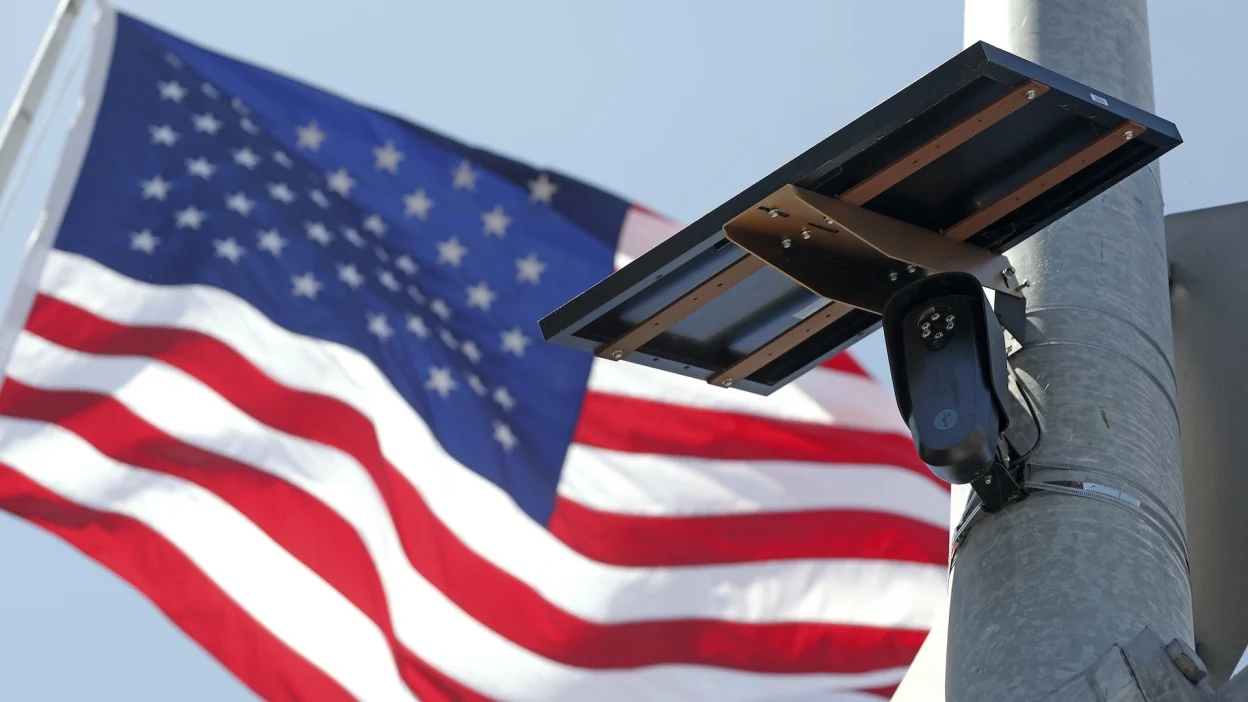
A Flock Safety ALPR camera mounted on a pole in front of an American flag
A 4th Amendment question, mounted on every pole
1967

Katz v. United States

389 U.S. 347 (1967)

The Court held that wiretapping a public phone booth without a warrant was a search, even though police never physically trespassed. Justice Harlan's concurrence created the test still used today: a search happens when the government invades a person's reasonable expectation of privacy.

Why it matters: This is the foundation every ALPR argument has to satisfy — the question isn't whether police touched your property, it's whether they invaded a reasonable expectation of privacy.

Read the source
2012

United States v. Jones

565 U.S. 400 (2012)

Police attached a GPS tracker to a suspect's car and tracked it for 28 days without a valid warrant. The majority struck this down on narrow property grounds, but Justice Sotomayor's concurrence went further: long-term location tracking is a search because it builds “a precise, comprehensive record of a person's public movements” — everywhere from the doctor's office to a place of worship to a political meeting.

Why it matters: Sotomayor's concurrence is the origin of the “mosaic theory”: individually public movements, logged and aggregated over time, add up to something far more invasive than any single observation. That's exactly what a permanent camera network does.

Read the source
2018

Carpenter v. United States

585 U.S. 296 (2018)

The Court ruled 5–4 that police need a warrant to obtain historical cell-site location data from a phone carrier — even though that data is technically held by a third party. Comprehensive, retrospective location tracking gives the government “an intimate window into a person's life,” the Court held, and the old rule that you lose privacy in anything shared with a third party doesn't stretch that far.

Why it matters: This is the single most important case here. Carpenter says persistent, granular location tracking is a search because of the mosaic it creates — regardless of whether any one data point was private on its own. A citywide ALPR network that logs every vehicle, every day, is arguably a more detailed version of exactly what Carpenter found unconstitutional without a warrant.

Read the source
2021

Leaders of a Beautiful Struggle v. Baltimore Police Dept.

2 F.4th 330 (4th Cir. 2021) (en banc)

Baltimore ran a pilot aerial-surveillance program that photographed roughly 90% of the city for 12 hours a day, capable of reconstructing individuals' movements when combined with ground cameras. Sitting en banc, the full Fourth Circuit reversed a panel decision and held the program likely violated the Fourth Amendment — applying Carpenter's mosaic-theory logic to a citywide tracking program, not just phone records.

Why it matters: This is the strongest circuit-level precedent applying Carpenter to a citywide, persistent surveillance network rather than an individual's phone — directly analogous to a citywide grid of ALPR cameras.

Read the source
2020

Commonwealth v. McCarthy

484 Mass. 493 (2020)

Massachusetts's highest court held that four fixed ALPR cameras tracking a suspect over a bridge for three months was not, on those narrow facts, a search. But the court went out of its way to say a more widespread ALPR network would be different — “the whole of one's public movements” is constitutionally protected, and pervasive ALPR coverage could reveal that whole the same way GPS tracking does.

Why it matters: Even a court that rejected this particular suppression claim explicitly warned that broader ALPR deployment crosses the constitutional line. Coverage and scale are exactly what's growing in Anna.

Read the source

This is being actively litigated right now

The Institute for Justice sued Norfolk, Virginia in October 2024 on behalf of two residents, arguing that Norfolk's network of 176 Flock cameras — which photograph every passing vehicle and retain the data for 21 days — is a warrantless search under Carpenter. A federal district court ruled against the plaintiffs in January 2026; the case is now on appeal to the Fourth Circuit and has not been finally decided. The ACLU has filed a brief supporting the challenge.

The point isn't that courts have already settled this — it's that this exact question, about this exact company's cameras, is an open, live legal fight. Residents don't have to wait for a final ruling to demand their own city reconsider the contract.

Schmidt v. City of Norfolk — ACLU case page

Not a lawyer, and this isn't legal advice — it's a summary of public case law to help residents make an informed case to the Anna City Council.